Hi everyone!
Are you interested on technology and how it is evolving towards the future?
Would you like to explore how information and communication technology can enable us to live in a more sustainable world?
Together with two friends, we started to share some perspectives on how connectivity is shaping the our world, we call it Connective Age.
Have a look here: http://connectiveage.com
See you!
Monday, May 14, 2012


Friday, March 23, 2012
Innovation | OpenIDEO
"OpenIDEO is a place where people design better, together for social good. It's an online platform for creative thinkers..." OpenIDEO About us.
I first came across OpenIDEO a few months ago when I joined the challenge: "How might we use social business to improve health in low-income communities?". Immediately felt in love with the diverse background of the people and the amount of inputs coming from all over the world.
You probably want to participate in the current challenge: "How might we support web entrepreneurs in launching and growing sustainable global businesses?".
In the current phase people is showcasing "Inspirations" (things already happening around the world), then we will move to "Concepting" (where you can make your owm proposal), to finalize with a selection.
All "Challenges" are sponsored by organizations willing to take the input forward and all knowledge gathered is free to use with pride.
I first came across OpenIDEO a few months ago when I joined the challenge: "How might we use social business to improve health in low-income communities?". Immediately felt in love with the diverse background of the people and the amount of inputs coming from all over the world.
You probably want to participate in the current challenge: "How might we support web entrepreneurs in launching and growing sustainable global businesses?".
In the current phase people is showcasing "Inspirations" (things already happening around the world), then we will move to "Concepting" (where you can make your owm proposal), to finalize with a selection.
All "Challenges" are sponsored by organizations willing to take the input forward and all knowledge gathered is free to use with pride.
Thursday, March 31, 2011
El Estadio Nacional y el Mundial de Brasil 2014

-------------------
Donde la Preparación y la Oportunidad se Encuentran.
Desde lo lejos observo con una nostalgia de felicidad las celebraciones en mi querida Costa Rica por la inauguración del nuevo Estadio Nacional.
Sonrío con el acontecer patrio. Sonrío por las pinceladas de realidad nacional que dan nuestros jugadores al pedir autógrafos y por la coordinación con que los aficionados cubren el silencio de silbidos cuando Lionel u Oscar aparecen en escena.
Pero desde lo lejos también me cuestiono. Me cuestiono si el país que tenemos es consecuencia de nuestro batallar por hacer realidad nuestros sueños o simple y pura suerte.
¿Suerte?.
Suerte es donde la preparación y la oportunidad se encuentran (Seneca, político y filosofo romano).
La oportunidad es la Copa Mundial de Fútbol de FIFA en Brasil en el 2014. La oportunidad es compartir el mismo huso horario con el país del sur, es estar relativamente cerca de los aeropuertos estadounidenses, es tener un clima variado y tener ciudades a muy diferentes altitudes. Suerte es que Europa, África y Asia están lejos y que probablemente las grandes selecciones de fútbol busquen una sede que los reciba por un mes antes del mundial.
Preparación es el nuevo Estadio Nacional, que más palabras de halago son desperdicio. Preparación es el Proyecto Gol y la mención de Julio Grondona: “no pensaba que en la región de la CONCACAF me fuera a encontrar algo así”.
Preparación es nuestra imagen de país democrático, respetuosos de los derechos humanos, “el país más feliz del mundo”. Es nuestra infraestructura turística, nuestro nivel de inglés y nuestros futbolistas embajadores por todo el mundo.
¡Eso sí que es suerte! Futbol, infraestructura y promoción turística-tecnológica.
¿Lo que me cuestiono es cuando empezamos a trabajar para hacerle buena cara a nuestra buena suerte?
Wednesday, December 08, 2010
What makes an Entrepreneur?
Data matters, but doesn't make money. Connecting with Customers does.
Read complete post here.
"I used to sit on the board of a company (for which I DID NOT invest) with a very smart and very likable CEO. This person was educated at the best US schools and had worked for a top-tier strategy consulting firm – one of the big 3. The CEO led every board meeting with vigor and the board members (sans me) were always wowed. The CEO had 60-page Powerpoint presentations analyzing every micro detail of the business. The company had less than $5 million in revenue yet we had a multi-tab spreadsheet doing activity-based costing on our customer service staff, operations and technology.
We had every chart every invented by man (or McKinsey) showing failure rates of our product, mean-times-to-repair, detailed sales forecast charts, etc. Charts. What lovely charts! I know they would have been very useful in dissected the woes of General Motors. I was the only unimpressed board member. I was the one pointing out that we were behind on our sales targets and our “Elephant Deal” that had been promised was 6 months late.
After a few board meetings I finally spoke up. I was a bull in a china shop. I said (out loud), “I sure wish that some of the time that went into these PowerPoint slides would have gone into meetings with the COO, CFO or CMO of [Elephant Customer].” The CEO had never met with any of them.
With a CEO that likable, smart, educated and accomplished it made board members squirm that I was willing to call bullshit.
I’m sure you know what happens next. We missed our sales target by more than 66% for the year but we had great slides explaining why. The next year we set the sales budget equal to the previous year’s sales budget that we had missed. We missed the next year by more than 33%. Nobody seemed shocked. The company has burned through serious cash. I complained the whole way. It was not fun. No “independent” board members seemed to care (or even comprehend the lunacy of the whole situation).
To this day I’m sure they see the situation differently. Beautiful slides by top-tier consultants have hoodwinked large companies for years and I can see why. They are intoxicating, complex, insightful and tell a great story. But in the end they’re usually just that – a story. Sometimes a fantasy.
I still really like this CEO and have deep respect for this person outside of the role of being a CEO. The “Peter Principle” says that “everybody rises to their level of incompetency.” Read this as some people who are great at analyzing to not make great doers and therefore do not make great entrepreneurs. I think many VCs have learned this the hard way when they step in to temporarily run companies as I have seen happen.
The problem with the company that I described above was that there was somebody willing to fund ongoing losses and the board continued to believe that good times were just around the corner. Maybe they’ll be proved right some day. I certainly hope so. But in the UK we used to call this “promising jam tomorrow.” I was tired of jam tomorrow. I left the board. The company never JFDI."
Mark Suster is a 2x entrepreneur who has gone to the Dark Side of VC. He joined GRP Partners in 2007 as a General Partner after selling his company to Salesforce.com. He focuses on early-stage technology companies. Read more about Mark.
Read complete post here.
"I used to sit on the board of a company (for which I DID NOT invest) with a very smart and very likable CEO. This person was educated at the best US schools and had worked for a top-tier strategy consulting firm – one of the big 3. The CEO led every board meeting with vigor and the board members (sans me) were always wowed. The CEO had 60-page Powerpoint presentations analyzing every micro detail of the business. The company had less than $5 million in revenue yet we had a multi-tab spreadsheet doing activity-based costing on our customer service staff, operations and technology.
We had every chart every invented by man (or McKinsey) showing failure rates of our product, mean-times-to-repair, detailed sales forecast charts, etc. Charts. What lovely charts! I know they would have been very useful in dissected the woes of General Motors. I was the only unimpressed board member. I was the one pointing out that we were behind on our sales targets and our “Elephant Deal” that had been promised was 6 months late.
After a few board meetings I finally spoke up. I was a bull in a china shop. I said (out loud), “I sure wish that some of the time that went into these PowerPoint slides would have gone into meetings with the COO, CFO or CMO of [Elephant Customer].” The CEO had never met with any of them.
With a CEO that likable, smart, educated and accomplished it made board members squirm that I was willing to call bullshit.
I’m sure you know what happens next. We missed our sales target by more than 66% for the year but we had great slides explaining why. The next year we set the sales budget equal to the previous year’s sales budget that we had missed. We missed the next year by more than 33%. Nobody seemed shocked. The company has burned through serious cash. I complained the whole way. It was not fun. No “independent” board members seemed to care (or even comprehend the lunacy of the whole situation).
To this day I’m sure they see the situation differently. Beautiful slides by top-tier consultants have hoodwinked large companies for years and I can see why. They are intoxicating, complex, insightful and tell a great story. But in the end they’re usually just that – a story. Sometimes a fantasy.
I still really like this CEO and have deep respect for this person outside of the role of being a CEO. The “Peter Principle” says that “everybody rises to their level of incompetency.” Read this as some people who are great at analyzing to not make great doers and therefore do not make great entrepreneurs. I think many VCs have learned this the hard way when they step in to temporarily run companies as I have seen happen.
The problem with the company that I described above was that there was somebody willing to fund ongoing losses and the board continued to believe that good times were just around the corner. Maybe they’ll be proved right some day. I certainly hope so. But in the UK we used to call this “promising jam tomorrow.” I was tired of jam tomorrow. I left the board. The company never JFDI."
Mark Suster is a 2x entrepreneur who has gone to the Dark Side of VC. He joined GRP Partners in 2007 as a General Partner after selling his company to Salesforce.com. He focuses on early-stage technology companies. Read more about Mark.
Sunday, November 28, 2010
Proud to see who P&G chooses to Partner with Ashoka and E-Health Point
P&G, Ashoka and E-Health Point are combining efforts to scalate E-Health Point's concept of mobile health units.
A mobile health unit is able to bring to rural communities clean water, medicines, diagnostic tools and tele-medical services quckly and cost efficiently.
In a few words, it brings into remote corners of the World to people with little or none access to health services the opportunity to reach it.
Technology has the potential to provide access but more efforts are needed to close the gap between potential and reality.
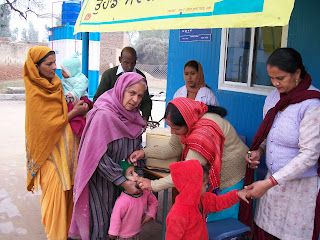
Thanks for sharing Ewelina :) - former team mate now at Ashoka.org
A mobile health unit is able to bring to rural communities clean water, medicines, diagnostic tools and tele-medical services quckly and cost efficiently.
In a few words, it brings into remote corners of the World to people with little or none access to health services the opportunity to reach it.
Technology has the potential to provide access but more efforts are needed to close the gap between potential and reality.

Thanks for sharing Ewelina :) - former team mate now at Ashoka.org
Friday, November 26, 2010
Driving change
Change is one of the most passionate periods in organizations.
It is about realizing that we can be better and that currently we are not.
It is about making choices, tough choices.
But overall is about clean the path for others to fulfill their potential and deliver the results we all want.
I have always being loud and explicit about what I think and I know that it works only when you seasoned it with achievements and recognition.
I am entering a new stage and the main memory that comes to my mind is the basic rule for LCPs: “set priorities, cut the sht and get it done”.
Wish me luck, we all need it, because the main challenge is to manage myself.
It is about realizing that we can be better and that currently we are not.
It is about making choices, tough choices.
But overall is about clean the path for others to fulfill their potential and deliver the results we all want.
I have always being loud and explicit about what I think and I know that it works only when you seasoned it with achievements and recognition.
I am entering a new stage and the main memory that comes to my mind is the basic rule for LCPs: “set priorities, cut the sht and get it done”.
Wish me luck, we all need it, because the main challenge is to manage myself.
Saturday, November 13, 2010
Podemos vivir en paz?
Depende.
Pregunto, ¿cuál es el sujeto del verbo podemos?
¿Quiénes somos nosotros?
Nuestros Gobiernos están sumidos en un conflicto.
Pero cada uno de nosotros, de cualquier lado del Río San Juan, seguimos la lucha sin fin de vivir en Paz.
Nosotros no tiene límite. Esa frontera solo está en nuestra mente y con buena suerte, en Google Maps.
La Paz se gana en la casa de cada uno, en el trabajo, con los amigos. Se construye escuchando, apreciando.
Se pierde en la calle cuando disparamos estupideces a los desconocidos. Cuando manejamos borrachos. Cuando vendemos nuestros recursos naturales. Cuando dejamos un niño vivir sin educación o la oportunidad de jugar. Cuando dejamos que el odio nos absorba cuando no entendemos.
Nosotros somos la gente de Costa Rica y Nicaragua. De Panamá y Colombia. De El Salvador y Honduras. La gente, simplemente.
El camino de la Paz se decide en momentos difíciles, en momentos de conflicto, y cuando el diálogo parece no ser opción, es porque es el único camino.
Pregunto, ¿cuál es el sujeto del verbo podemos?
¿Quiénes somos nosotros?
Nuestros Gobiernos están sumidos en un conflicto.
Pero cada uno de nosotros, de cualquier lado del Río San Juan, seguimos la lucha sin fin de vivir en Paz.
Nosotros no tiene límite. Esa frontera solo está en nuestra mente y con buena suerte, en Google Maps.
La Paz se gana en la casa de cada uno, en el trabajo, con los amigos. Se construye escuchando, apreciando.
Se pierde en la calle cuando disparamos estupideces a los desconocidos. Cuando manejamos borrachos. Cuando vendemos nuestros recursos naturales. Cuando dejamos un niño vivir sin educación o la oportunidad de jugar. Cuando dejamos que el odio nos absorba cuando no entendemos.
Nosotros somos la gente de Costa Rica y Nicaragua. De Panamá y Colombia. De El Salvador y Honduras. La gente, simplemente.
El camino de la Paz se decide en momentos difíciles, en momentos de conflicto, y cuando el diálogo parece no ser opción, es porque es el único camino.
¿Podemos vivir en Paz?
Depende, de usted!
Sunday, October 31, 2010
Uplifting people out of poverty by sharing your management experience
Small farmers and producers from developing countries face major challenges commercializing their products to gain volume and charge fair prices.
Yesterday we hosted two friends, Inbal and Pierre, in their way back to Uganda. Among others, they are involved on supporting local farmers bringing their products with a higher competitive edge to wider markets.
The experiences they shared made me realized that there is something many of us -young professionals- can do to support these communities.
Of course most of it should be done onsite after gaining awareness of the local reality but It could really enable them to reach more stable and fair income from their work and investments.
My first thoughts range from uplifting the purchasing and selling power by enabling the formation of "cooperativas" to more simple actions like educating them to negotiate shelf space in local super markets.
As usual, what excited me the most is what they could do with an intelligent mobile phone and some good preparation to spot opportunities and trade resources with less effort. It also called my attention that in the last 90 days, one of the key search trends in Uganda has been "Orange Uganda", refering to the mobile comm provider - http://www.orange.ug/. In their Home Page they offer as new exciting key service: "internet everywhere" :).
It is always great hosting friends that challenge the way I live and the way I believe I can contribute.
Yesterday we hosted two friends, Inbal and Pierre, in their way back to Uganda. Among others, they are involved on supporting local farmers bringing their products with a higher competitive edge to wider markets.
The experiences they shared made me realized that there is something many of us -young professionals- can do to support these communities.
Of course most of it should be done onsite after gaining awareness of the local reality but It could really enable them to reach more stable and fair income from their work and investments.
My first thoughts range from uplifting the purchasing and selling power by enabling the formation of "cooperativas" to more simple actions like educating them to negotiate shelf space in local super markets.
As usual, what excited me the most is what they could do with an intelligent mobile phone and some good preparation to spot opportunities and trade resources with less effort. It also called my attention that in the last 90 days, one of the key search trends in Uganda has been "Orange Uganda", refering to the mobile comm provider - http://www.orange.ug/. In their Home Page they offer as new exciting key service: "internet everywhere" :).
It is always great hosting friends that challenge the way I live and the way I believe I can contribute.
Tuesday, October 26, 2010
Small roads take you to small villages.
If you are one of those persons with a car, you probably know the feeling you get when you enter into a small road. Either you know exactly where you are going or you start staring everywhere -except ahead- because something in the back of your mind is telling you: “this is not the right way!”.
During my last term in AIESEC, the team proposed to deliver approximately 6500 international internships. There were four areas to focus: supply/demand management, marketing, finance and internal collaboration -at global network level-.
When it was first introduced, we focused on making sure that it was clear where the results were going to come from and which capabilities (skills, competencies, attitudes and info sys) would drive us there. The country representatives were all willing to grow but not few were skeptical about the goal.
By the end of the term, in the middle of the financial crisis, we managed to deliver the goal and a bit more. We also left the pipeline ready for what we expected was going to be the greatest year in AIESEC history after its foundation, 2010.
We decided in that moment not to take the small road, we went for the highway. Our minds and hearts were searching for opportunities in the front rear and not looking for explanations in the back mirror.
The back mirror helps a lot -especially if you want to go backwards!- but if you use it in excess is because something is wrong.
The more you report -the more you look back- and the more questions you try to answer about what happened, the less time you have to focus on spotting opportunities, building capabilities and delivering results.
If during our AIESEC time, we would have looked into the back mirror we would have seen that we were aiming at index 145% year ago! That we only delivered such quantity during the 80’s and we had to pay a very high price for stretching the organization in such way. We would have seen an increasing trend on travel restrictions and also growing competition in all key markets. That was just the past.
Estimate how much time you spend reporting every day and compare that with how much time you spend looking for opportunities, maybe -just maybe- that correlates to the results you are delivering.
During my last term in AIESEC, the team proposed to deliver approximately 6500 international internships. There were four areas to focus: supply/demand management, marketing, finance and internal collaboration -at global network level-.
When it was first introduced, we focused on making sure that it was clear where the results were going to come from and which capabilities (skills, competencies, attitudes and info sys) would drive us there. The country representatives were all willing to grow but not few were skeptical about the goal.
By the end of the term, in the middle of the financial crisis, we managed to deliver the goal and a bit more. We also left the pipeline ready for what we expected was going to be the greatest year in AIESEC history after its foundation, 2010.
We decided in that moment not to take the small road, we went for the highway. Our minds and hearts were searching for opportunities in the front rear and not looking for explanations in the back mirror.
The back mirror helps a lot -especially if you want to go backwards!- but if you use it in excess is because something is wrong.
The more you report -the more you look back- and the more questions you try to answer about what happened, the less time you have to focus on spotting opportunities, building capabilities and delivering results.
If during our AIESEC time, we would have looked into the back mirror we would have seen that we were aiming at index 145% year ago! That we only delivered such quantity during the 80’s and we had to pay a very high price for stretching the organization in such way. We would have seen an increasing trend on travel restrictions and also growing competition in all key markets. That was just the past.
Estimate how much time you spend reporting every day and compare that with how much time you spend looking for opportunities, maybe -just maybe- that correlates to the results you are delivering.
Saturday, October 23, 2010
Starts today!
Four months ago I started a new phase in my life.
After leading a global NGO, I started a journey that brought me to the frontline of a major corporation.
I went from dealing with global issues like the financial crisis, migration flows and environment to make sure I report accurately last week performance.
Most people that knew me ask me three questions: 1) Why? 2) How is it? 3) What will be next for you?
While I keep asking myself the basics: 1) What am I really passionate about? 2) What makes me unique/what are my key strengths? 3) How can I make a change?
Last week, we had the visit of a few friends and their questions made me realize that my journey contains learning valuable to share.
The first step in that direction was to get online again. The second, to make the first post. The third, starts today!
After leading a global NGO, I started a journey that brought me to the frontline of a major corporation.
I went from dealing with global issues like the financial crisis, migration flows and environment to make sure I report accurately last week performance.
Most people that knew me ask me three questions: 1) Why? 2) How is it? 3) What will be next for you?
While I keep asking myself the basics: 1) What am I really passionate about? 2) What makes me unique/what are my key strengths? 3) How can I make a change?
Last week, we had the visit of a few friends and their questions made me realize that my journey contains learning valuable to share.
The first step in that direction was to get online again. The second, to make the first post. The third, starts today!
Tuesday, June 08, 2010
Feel Younger, Live Longer: The World’s Healthiest Places to Live
“Blue Zones have been determined by scientists as places where the world’s longest-living people reside. One of these is Costa Rica’s Nicoya Peninsula on the country’s northwest coast.
Researchers spent nine months there in 2007 to determine why so many people live well into their 90s and 100s—longer than anywhere else in Costa Rica…or the world, for that matter.
The scientists studying the centenarians of the Nicoya Peninsula found eight key reasons for this longevity:
- Diet. The people here are heavily influenced by the indigenous diet of the Chorotega, consisting of high-fortified corn and beans—healthy and high in fiber.
- Water. With loads of calcium, the hard water encourages strong bones and fewer hip fractures.
- Family focus. The Nicoya centenarians tend to live as couples or with children and/or other family members from whom they get support.
- Eating lightly. They eat a light dinner early in the evening. (Eating fewer calories is proven to add years to your life.)
- Dry climate. Nicoya is the driest part of Costa Rica, and in dry climates food doesn’t spoil as quickly, the sun is more intense, and people get fewer respiratory diseases and more Vitamin D.
- Social networks. The centenarians here get frequent visitors and they know how to listen, laugh and appreciate what they have.
- Work. They’ve enjoyed physical work all their lives and find joy in everyday chores.
- Purpose. They feel needed and want to contribute to a greater good."
Source (Find the complete rank): http://internationalliving.com/2010/06/feel-younger-live-longer-the-world%E2%80%99s-healthiest-places-to-live/
Wednesday, May 26, 2010
Monday, May 24, 2010
Friday, May 14, 2010
Thursday, May 06, 2010
Costa Rica ranks 3rd on FORBES "The World's 10 Cleanest Countries"

Who are the other 9? Find it here: http://www.forbes.com/2010/04/21/environment-cleanest-countries-business-iceland-cleanest-countries_slide.html
Wednesday, May 05, 2010
Identifying the Core of Costa Rica’s Shrewd Sourcing Strategy
"In 1996 Costa Rica shocked the sourcing world by winning a $300 million deal with Intel to build a new semiconductor plant, against a host of seemingly better qualified countries. Since then, through coordinated government effort, the ‘new kid on the block’ has become a choice destination for high-end ITO and software development services. Can Costa Rica continue its winning ways or are there".
Read complete article: http://www.nearshoreamericas.com/country-profile-identifying-the-real-source-of-costa-ricas-winning-sourcing-strateg/3551/
Read complete article: http://www.nearshoreamericas.com/country-profile-identifying-the-real-source-of-costa-ricas-winning-sourcing-strateg/3551/
Wednesday, April 21, 2010
Sunday, April 18, 2010
Why Entrepreneurs Don't Need VCs
"I'm not saying it's easy to launch a new start-up, or to create a successful new product. On the contrary, breaking through the noise of all the options in the market today, and then staying ahead of the inevitable fast-followers, makes it more challenging than ever. I'm just saying that an entrepreneur doesn't need venture capital to do it.
So if the next generation of entrepreneurs aren't going to need $10 million to get a product to market or even build a fast-growing, cash-flowing business, what is the role for the venture capital industry? How will VCs stay relevant when the cost of launching an Internet business asymptotically approaches "free"?"
Read all at: http://www.forbes.com/2010/04/13/entrepreneurs-venture-capital-technology-security-10-startups.html
Saad Khan is a partner at venture capital firm CMEA Capital where he looks after CMEA's Web and new media investments. He also leads CMEA's seed initiative and early investments in Pixazza, Blekko and Jobvite. He blogs at cmea.com/blog and saadwired.com. You can follow him on Twitter @saadventures.
---------------------------------
"What an incredible oversimplification of a highly complex process. "Get customers" for example: no mention of the cost/effort/time to actually deliver a product to those customers and no mention of how will they pay for whatever it is you are selling." Larry Davis
"The reality is that VC's are necessary for enterprises that have reached a certain level of maturity as banks are notoriously risk averse." Tony Hall
"The only issue I see is that your approach is good for internet and software related business where the entry barriers are relatively low and also the capital needs are relatively modest." Rogelio.
"Don't disagree that it is possible to build a software venture without VC money. However, it is disappointing that the orientation of the industry is to build junk software to get rich quick. Do we really need more social networking, photo sharing, twitter, etc. etc. The main web and mobile application now seems to be passing around useless information." A.S.
So if the next generation of entrepreneurs aren't going to need $10 million to get a product to market or even build a fast-growing, cash-flowing business, what is the role for the venture capital industry? How will VCs stay relevant when the cost of launching an Internet business asymptotically approaches "free"?"
Read all at: http://www.forbes.com/2010/04/13/entrepreneurs-venture-capital-technology-security-10-startups.html
Saad Khan is a partner at venture capital firm CMEA Capital where he looks after CMEA's Web and new media investments. He also leads CMEA's seed initiative and early investments in Pixazza, Blekko and Jobvite. He blogs at cmea.com/blog and saadwired.com. You can follow him on Twitter @saadventures.
---------------------------------
"What an incredible oversimplification of a highly complex process. "Get customers" for example: no mention of the cost/effort/time to actually deliver a product to those customers and no mention of how will they pay for whatever it is you are selling." Larry Davis
"The reality is that VC's are necessary for enterprises that have reached a certain level of maturity as banks are notoriously risk averse." Tony Hall
"The only issue I see is that your approach is good for internet and software related business where the entry barriers are relatively low and also the capital needs are relatively modest." Rogelio.
"Don't disagree that it is possible to build a software venture without VC money. However, it is disappointing that the orientation of the industry is to build junk software to get rich quick. Do we really need more social networking, photo sharing, twitter, etc. etc. The main web and mobile application now seems to be passing around useless information." A.S.
Sunday, April 04, 2010
Can Bing Maps beat Google Maps?
You decide!
And, what possibilities will arise if it gets combined with this:
Subscribe to:
Posts (Atom)